October 4, 2026
Why Trade Deductions From a 10% MCB Are Not 10% of the Case Price
Trade deductions from a 10% manufacturer chargeback are not 10% of your case price, because the percent is on the distributor's price to the retailer.

Trade deductions like a 10% manufacturer chargeback sound like a number you can do on a napkin. You know what you charge the distributor for a case, you take 10% off, and you think you know what the promo will cost.
That reading is often wrong. A manufacturer chargeback, often shortened to MCB, is a deduction a distributor takes to bill you back for a promotional discount. The percent is usually applied to the distributor's price to the retailer, not to the case price you invoiced them. Ten percent of their price isn't the same as ten percent of yours.
When you sell through a distributor, the promo you agreed to doesn't always land as a lower price on your original invoice. The distributor ships, sells, and then charges the discount back to you on the remittance. That bill-back is the manufacturer chargeback. It can sit next to shortages, spoils, admin fees, and other deductions, which is why it's easy to treat the whole haircut as one noisy number.
The chargeback is still a price decision. It's the cost of a discount you funded. If you can't see which dollars were that discount, you can't tell whether the deal you approved is the deal you paid for.
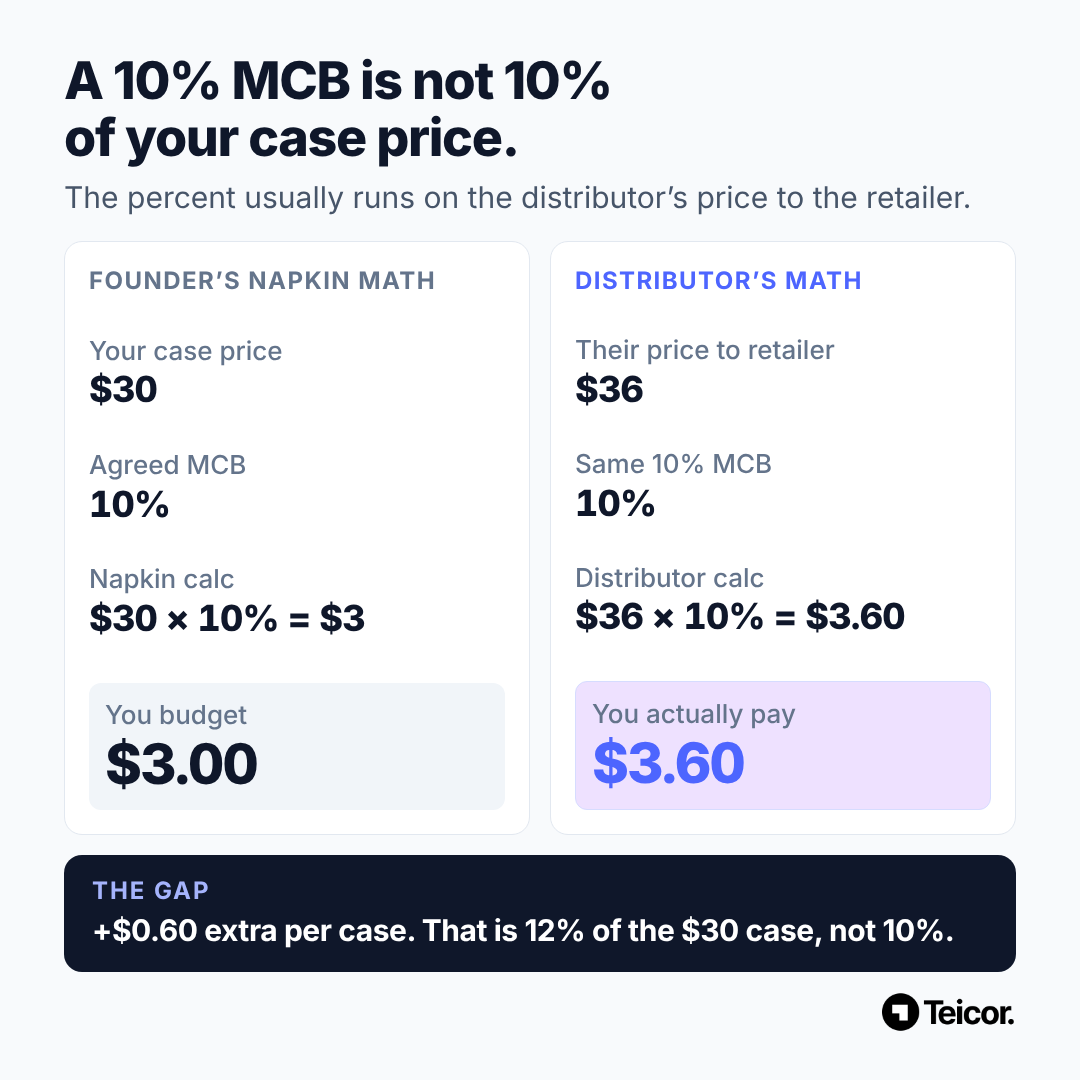
You agree to a 10% MCB, and the first math uses your case price to the distributor. Say you sell a case at $30, so you budget $3.
Distributors usually don't calculate the percent on the price you billed them. They often apply it to their wholesale price to the retailer, and that price already includes their markup. If their price to the retailer is higher than the $30 you invoiced, 10% of their price is more than the $3 you planned. You end up funding a discount on their selling price, not only on yours. Over a full promo calendar, that gap is margin you never put in the plan.
This is the same mechanism in gross-to-net without the distributor mythology, which walks from the invoice to the cash and puts this deduction in with the rest of the remittance. Read that one if you want the chart of accounts and the monthly review. This one is only the percent.
Ask which price the percent applies to, and get that base in the deal before you sign. If the answer is their price to the retailer, budget the deduction off that base, not off your case price. If nobody can tell you the base, you don't yet know what 10% costs.
When the remittance comes in, tie the chargeback to the invoice and to the promo window it belongs to. Don't park it in a single discounts line with shortages and fees. Once those sit together, you can't tell a planned promo from a deduction you should dispute. At Teicor we sit in these brands as fractional CFOs, and this is one of the first lines we want separated so the promo calendar is priced on what you'll actually pay.
A lower case price on your invoice can still be the right way to run a deal. The miss is approving a percent as if it meant 10% of your price when the contract applies it somewhere else. Price the promo on the base that will actually be used, and then check the remittance against that number while the dispute window is still open.
If the 10% on the deal sheet still doesn't match the deduction that hit the bank, I'd love to look at one remittance with you. Use our contact page and tell us which distributor and which promo window. If it's easier to pick a time, you can book a call on my calendar.
It's a deduction a distributor bills back to you for a promotional discount. You often still invoice the case at the regular price, and the discount comes out later on the remittance.
Because the percent is often applied to the distributor's price to the retailer, which already includes their markup. Ten percent of that higher price is more than ten percent of the case price you billed.
No. An off-invoice discount lowers the price on the invoice you send. A manufacturer chargeback leaves the invoice alone and takes the discount back later as a deduction. Both can cost more than the napkin math if you don't know which price the percent uses.
Ready to gain clarity in your numbers and confidence in your decisions? Let’s build the financial foundation your business needs to operate smoothly and scale profitably.

Our latest news and trending topics